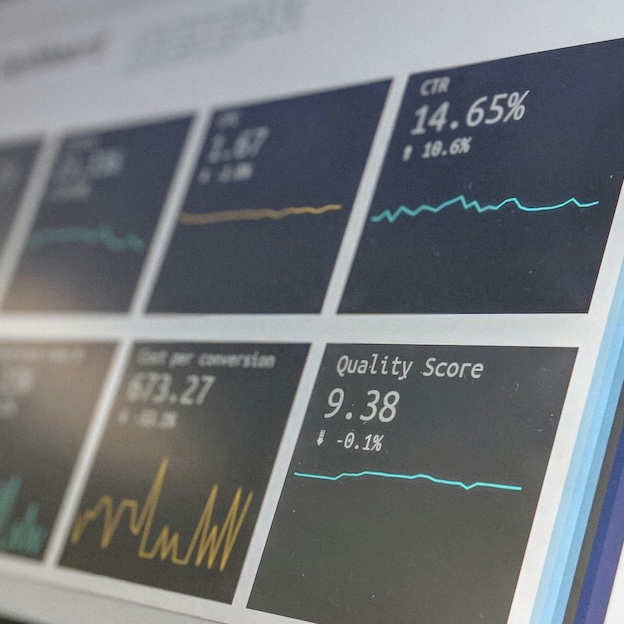
Today, one of the biggest growth drivers for B2B distributors and sellers occurs at checkout or on their payment page. Deferred payment solutions have evolved from a “nice-to-have” to a must-have, transforming the way buyers decide where to purchase and in what quantities.
In this article, we will explore why deferred payments are becoming the new competitive advantage in B2B and how distributors and sellers can accurately measure their ROI.
Why Deferred Payments Are Essential in B2B
In B2C, purchases are often fast, emotional, and relatively low-risk. In B2B, however, the story is different. Orders and transactions are larger, approval processes are slower, and cash flow management plays a central role in every purchasing decision. This is why the payment experience has become one of the key factors influencing whether a purchase goes through or not.
Many companies, especially SMEs, operate with tight margins and face unpredictable cash flow cycles. A rigid payment structure can delay—or even completely block—transactions, creating friction for buyers and lost revenue for B2B distributors and sellers.
For B2B buyers, deferred payments directly support three essential priorities:
- Cash flow management: Align outgoing payments with incoming revenue cycles.
- Risk reduction: Avoid committing capital to large or unexpected orders.
- Convenience: Accelerate purchasing decisions by reducing credit approval bottlenecks.
Conversely, when buyers have access to flexible financing solutions—whether through installment payments, extended payment terms, or spread-out financing for larger purchases—purchase barriers are significantly reduced.
According to a study by Allianz Trade on B2B, B2B distributors and sellers offering BNPL solutions saw a 40% increase in conversion rates, while those providing credit financing observed an average 60% increase in order size. Additionally, 29% of B2B buyers abandon their purchases when deferred payment options are unavailable.
These data show that offering flexible payment terms can be a real growth driver for B2B distributors and sellers.
How Deferred Payment Solutions Boost Conversions
When it comes to converting B2B buyers, price isn’t the only deciding factor. Timing and cash flow matter just as much. Even motivated buyers can abandon an order if they can’t align payment terms with their financial situation. This is where deferred payments truly prove their value.
Research shows that more than half of SMEs would switch suppliers if a competitor offered more suitable financing terms. This figure is significant: it demonstrates that payment terms alone can determine whether a customer chooses you over a competitor.
The preference of buyers for deferred payments is easy to understand:
- Reduces payment-related anxiety: 61% of SMEs report experiencing difficulties with payments. Buyers are less likely to hesitate or abandon their cart when options like 30-day payments, 3x or 6x installments, or deferred payments are offered online and in-store.
- Encourages larger transactions: When buyers don’t have to pay everything upfront, they are more likely to increase quantities or add higher-value items.
- Enables faster decision-making: Deferred payment terms can eliminate delays caused by internal approvals, allowing buyers to seize opportunities quickly.
For B2B distributors and sellers, this translates into measurable increases in conversion rates. At RollingFunds, we observe that B2B distributors and sellers offering integrated financing (B2B BNPL) see higher conversion rates, larger average order sizes, and improved customer retention compared to those relying on rigid terms or traditional financing methods.
Why B2B BNPL Financing Strengthens Customer Loyalty
Conversion rates are important, but the true ROI of deferred payments becomes apparent after the first purchase. In B2B, long-term customer relationships often generate the majority of revenue. Payment options that reduce friction don’t just close a sale—they encourage buyers to return again and again.
Research shows that acquiring a new customer can cost 5 to 25 times more than retaining an existing one, and even a 5% increase in retention can boost profits by 25 to 95%:. Financing is one of the most effective levers B2B distributors and sellers can use to encourage loyalty because:
- Predictability builds trust: When buyers know they can spread costs over time without hidden fees, they are more likely to view a supplier as a reliable partner rather than just a transactional vendor.
- Cash flow alignment encourages repeat purchases: Small businesses often face irregular revenue cycles. Deferred payment terms ensure that even during slow periods, buyers can continue purchasing what they need without depleting their working capital. For SMEs without access to financing or cash reserves, 33% say fast access to payment is the most important advantage when making a purchase.
- Personalization matters: Offering options like installment payments for orders or extended terms gives clients the impression that deferred payment solutions are tailored to meet their actual needs.
Over time, deferred payments (B2B BNPL) create a powerful virtuous cycle of loyalty. Buyers who feel financially supported are more likely to repeat purchases, expand their relationship with the supplier, and recommend them to others.
Measuring the ROI of B2B BNPL (Deferred Payments)
Knowing that deferred payment options increase conversions and loyalty is a great first step, but B2B distributors and sellers need concrete data to prove ROI. The good news is that the impact of financing can be tracked at multiple stages of the buyer journey.
Here are the most important metrics to measure:
Conversion Rate at Checkout
Track the percentage of buyers who complete a purchase when integrated financing is offered versus when it is not. Even small increases in conversion rates can translate into significant revenue gains at scale.
Formula:
ROI = (Conversion rate with financing – Conversion rate without financing) ÷ Conversion rate without financing × 100
Example: If conversions increase from 18% to 25%, that represents a 39% increase directly linked to financing.
Average Order Value (AOV) Growth
Deferred payments encourage customers to increase their order size. A buyer may hesitate to place a €5,000 order upfront, but with options like 30, 45, 60, 90, or even 180-day deferred payments, the same order becomes more accessible. Compare AOV before and after introducing financing to measure this growth.
Formula:
AOV Growth = (AOV with financing – AOV without financing) ÷ AOV without financing × 100
Example: If the average order increases from €1,200 to €2,400 when using RollingFunds, that represents a 100% increase in AOV.
Repeat Purchase Rate
Buyers who know they can pay according to terms aligned with their cash flow are more likely to return. Track how often customers make repeat purchases within 30, 60, 90, or 180 days of their first purchase.
Formula:
Repeat Purchase Rate = Number of financed customers who reorder ÷ Total financed customers
Example: If 60% of customers using financing make a new purchase within three months, versus 35% of those paying upfront, financed buyers are almost twice as likely to return. This clearly shows that deferred payment solutions directly boost loyalty.
Customer Lifetime Value (CLV)
CLV is one of the most powerful long-term ROI indicators. By increasing both purchase frequency and order size, B2B BNPL financing can significantly enhance the total value a customer brings over the course of their relationship with your business.
Formula:
CLV = Average order value × Purchase frequency × Average customer lifespan
Example: Compare financed customers placing an average €2,000 order five times a year for three years, versus non-financed customers ordering €1,000 four times per year over the same period — this represents a 2.5x gain.
(€2,000 × 5 × 3 = €30,000 vs €1,000 × 4 × 3 = €12,000)
Retention Rate and Churn
Financing builds trust and reliability. Compare retention rates of customers using deferred payment terms with those paying upfront. A lower churn rate among B2B BNPL users is a direct signal of ROI.
Formula:
Retention Rate = (Customers at end of period – New customers acquired) ÷ Customers at start of period × 100
Example: If financed customers have an 85% retention rate versus 65% for non-financed customers, it clearly shows that financing positively impacts recurring revenue.
New Customer Acquisition
Deferred payments can also serve as a growth lever by attracting new buyers who would otherwise abandon a purchase due to cash flow constraints. Track how many new accounts are acquired directly through deferred payment options.
Taken together, these key metrics create a comprehensive view of ROI:
- The Conversions demonstrate short-term impact.
- L’AOV , and repeat purchases show medium-term growth.
- The CLV highlights the long-term benefit of integrating deferred payments into the buying experience.
In summary
Deferred payments are now an essential growth driver in B2B. When buyers have more control over their payment terms, B2B distributors and sellers don’t just close more sales—they encourage larger orders, faster decisions, and stronger customer relationships that extend well beyond the first purchase.
The real advantage comes from continuous measurement. By quantifying B2B BNPL ROI through conversions, order size, and retention, you can turn these deferred payment solutions into a sustainable growth strategy.


